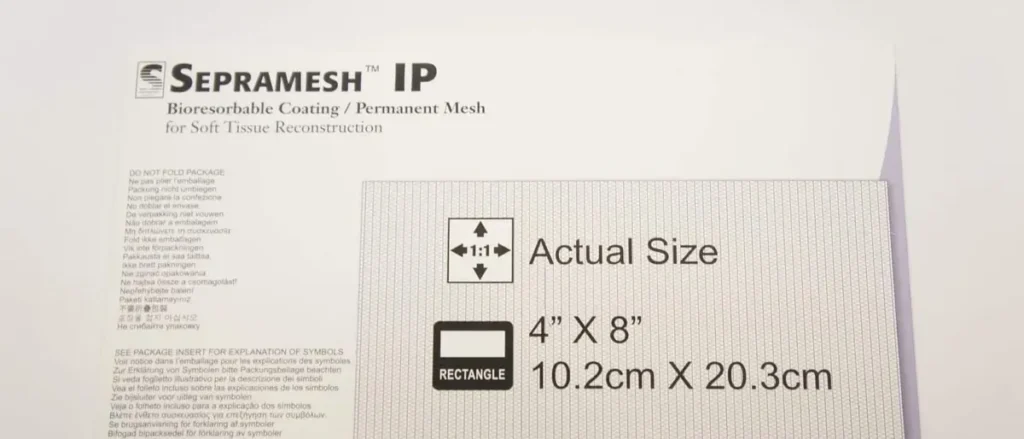
Sepramesh IP is a Bard composite hernia mesh used to repair ventral and incisional hernias. People who received Sepramesh have filed claims alleging that its absorbable coating broke down, allowing the bowel to stick to the polypropylene mesh and causing bowel obstruction, fistulas, chronic pain and repeated surgeries. If you had a Sepramesh implant and suffered severe complications, you may have a claim for compensation.
What Is Sepramesh?
Sepramesh IP was originally developed by Genzyme and is now sold by Bard through its Davol subsidiary. It is a polypropylene mesh with an absorbable hydrogel coating, which Bard calls Sepra technology, on the side facing the bowel. The coating is designed to keep the bowel from sticking to the mesh while the abdominal wall heals and then dissolve within about 30 days. The same coating is used on Bard’s Ventralex ST and Ventralight ST products. Sepramesh entered the market through the FDA’s 510(k) process, which does not require clinical trials.
Sepramesh Complications
People with Sepramesh have reported complications including:
- The bowel or other organs adhering to the mesh
- Bowel obstruction, perforation or fistula
- Chronic abdominal pain and inflammation
- Infection
- Seroma (fluid buildup around the mesh)
- Mesh contraction or degradation
- Hernia recurrence
- Repeated revision surgeries
What the Lawsuits Allege
The lawsuits allege that the absorbable coating breaks down before the mesh is safely covered by tissue, exposing the bowel to bare polypropylene, and that the polypropylene itself degrades inside the body and triggers chronic inflammation. They also allege that Bard failed to warn surgeons and patients about these risks. Sepramesh has not been recalled, but it is one of the Bard products named in the Bard hernia mesh litigation.
Where the Sepramesh Lawsuits Stand
Sepramesh claims are part of the Bard hernia mesh litigation: the federal multidistrict litigation, In re: Davol, Inc./C.R. Bard, Inc., Polypropylene Hernia Mesh Products Liability Litigation, MDL No. 2846, before Chief Judge Edmund A. Sargus Jr. in the Southern District of Ohio, and the consolidated cases in Rhode Island state court.
In October 2024, Bard’s parent company, Becton, Dickinson and Company, announced an agreement to resolve the vast majority of its hernia mesh lawsuits. The terms are confidential, and payments are being made over several years. The Bard MDL is still open, with 23,324 pending cases as of October 1, 2026, and new claims are still being filed.
Because of the global settlement, new Bard claims must meet newer and more demanding procedures. Among other steps, a newly filed case must produce the medical records identifying the mesh within 60 days and a report from a licensed physician tying the injuries to the mesh within 90 days, or it can be dismissed. For that reason, we are still reviewing select Bard claims with severe injuries, such as multiple revision surgeries, extended hospitalization or bowel damage. For the latest, see our Bard hernia mesh lawsuit update.
Who May Have a Sepramesh Claim
You may have a claim if:
- Your hernia repair used a Bard Sepramesh, which your operative report will show
- You have had severe complications, such as two or more revision surgeries, an extended hospital stay, or bowel damage like an obstruction, perforation, fistula or bowel resection
Every state sets a deadline, called the statute of limitations, for filing a claim, and it often runs from when you knew or should have known your injury was related to the mesh. Doyle APC has handled Bard hernia mesh claims for over a decade, and you pay nothing unless we win. Compensation can cover medical expenses, past and future, along with pain and suffering, loss of enjoyment of life and a spouse’s loss of consortium.
Other Bard mesh claims involve Ventralex and Ventralight ST, 3DMax, PerFix Plug and Composix and Kugel mesh. You can also read more about hernia mesh complications.
Common Questions
Has Sepramesh been recalled?
No. Sepramesh has not been recalled, but it is one of the Bard products named in the Bard hernia mesh litigation.
Who makes Sepramesh?
Sepramesh IP was originally developed by Genzyme and is now sold by Bard through its Davol subsidiary.
Is Sepramesh part of the Bard hernia mesh settlement?
Yes. Sepramesh claims are part of the Bard litigation that was largely resolved by the October 2024 settlement. New claims must meet strict court requirements.
Can I still file a Bard hernia mesh claim?
Yes. The Bard MDL is still open and new claims are still being filed, but new claims must meet strict requirements, including a physician’s report within 90 days. That is why we are reviewing select Bard claims with severe injuries.
What counts as a severe Bard hernia mesh injury?
Severe injuries include multiple revision surgeries, an extended hospital stay, and bowel damage such as an obstruction, perforation, fistula or bowel resection.